
The overlooked cost of sitting still: what heat does to men's health
A normal workday — a commute, a desk, a laptop on your lap — comes with a side effect almost nobody talks about. Here's what the research actually says, what it doesn't prove, and what's worth changing.

A normal workday has a side effect nobody mentions
For a lot of men, a typical weekday looks the same: a commute, several hours at a desk, a laptop that spends more time on a lap than a table, then a drive home and an evening on the couch. None of it feels unusual — it's just a normal week.

But sitting for extended periods changes more than posture. It traps heat. Office chairs, car seats, laptops, and tighter-fitting clothing all hold warmth against the body for hours at a stretch, in an area of men's health that's rarely part of the conversation at all.
The shift toward remote and hybrid work has made this more common, not less. Surveys of office workers consistently put average workday sitting time at six hours or more, and for a lot of remote workers, that time comes with a laptop resting directly on the lap rather than a desk — removing one more layer of distance between the body and a heat-generating device.
Why it's easy to miss
Part of the reason this flies under the radar is that the effects aren't dramatic or immediate. There's no single moment where something feels obviously wrong — just a slow, cumulative pattern that builds over months and years of the same daily habits. It's the kind of thing that's easy to overlook precisely because nothing about it feels urgent.
It's also not just a hormonal story. Heat and moisture trapped in the same area for hours at a time create conditions that are more prone to skin irritation, chafing, and the kind of fungal or bacterial overgrowth that thrives in warm, damp environments — issues that are common, generally minor, and almost never discussed openly, even though plenty of men deal with them.
Why temperature matters more than most men realize
The testes sit outside the body for a reason: they function best a few degrees cooler than normal body temperature. It's a detail most health classes skip, but it's well established in basic physiology — it's why the scrotum has its own mechanism for pulling closer to or further from the body to regulate temperature in the first place.
Extended heat exposure — from tight clothing, hot environments, or long stretches of sitting — has been studied for its effects on reproductive health for decades, including research into occupational groups with prolonged heat exposure on the job. Some research has also looked at a possible connection between prolonged heat exposure and hormone levels, including testosterone, though it's an area researchers are still actively studying, and the long-term, real-world impact isn't fully settled.
What's well established
- The testes function best a few degrees below core body temperature.
- Prolonged heat exposure has measurable effects on sperm production and quality.
- Heat and moisture buildup contribute to common skin irritation in the area.
What's still being studied
- How much everyday heat exposure (versus extreme, occupational exposure) affects hormone levels.
- How quickly any effect might reverse once heat exposure is reduced.
- How much individual variation plays a role.
Correlation isn't the whole story
It's worth being direct about the limits here. Testosterone and energy levels are influenced by dozens of factors — sleep, stress, diet, exercise, age, and genetics among them. Heat exposure is one variable in a much bigger picture, not a single explanation for how any one person feels day to day. Nobody should read this and conclude that swapping their underwear will outperform fixing a sleep schedule or getting more exercise.
What the research does support is a simple, low-risk idea: reducing unnecessary heat exposure in that area is a reasonable, conservative step, even while the full picture on hormone levels specifically continues to be studied.
Small adjustments that can help
None of this requires an overhaul. A few small, low-effort changes go a long way toward reducing how much heat builds up over the course of a day — and most of them cost nothing.

- 1 Stand up once an hour. Even a two-minute walk breaks up long, uninterrupted sitting and gives trapped heat somewhere to dissipate. A standing desk or a simple phone reminder works just as well as any app.
- 2 Keep the laptop off your lap. A desk, table, or lap stand keeps hours of direct heat from building up against the body. If you regularly work from a couch or bed, a $20 laptop stand solves most of the problem on its own.
- 3 Choose breathable fabrics. Looser-fitting, ventilated materials outperform tight synthetics for the hours you're sitting most. This applies to both underwear and outer layers like gym shorts or athletic compression wear.
- 4 Watch the daily heat habits. Saunas, hot tubs, and heated car seats are fine occasionally — it's the daily, back-to-back exposure that adds up. There's a meaningful difference between a weekly sauna session and sitting on a heated car seat every single commute.
- 5 Take a cooler shower before bed. A brief drop in temperature in the evening can help the body cool down after a day of sitting, on top of being a reasonable wind-down habit on its own.
- 6 Keep the basics in place. None of this replaces sleep, exercise, and a reasonable diet — those remain the biggest levers for energy and overall health. Heat management is a small addition on top of the fundamentals, not a substitute for them.
The one change most men never think to make
Of the adjustments above, one is the easiest to act on simply because it happens automatically — it's what's underneath everything else you put on every morning, which means getting it right doesn't require remembering to do anything differently.
Standard cotton underwear wasn't designed with any of this in mind. Cotton holds onto moisture once it's absorbed it, and most mass-market boxer briefs are built from a single, dense layer of fabric with no dedicated airflow anywhere — which is part of why the same pair can feel noticeably warmer by the afternoon than it did that morning.
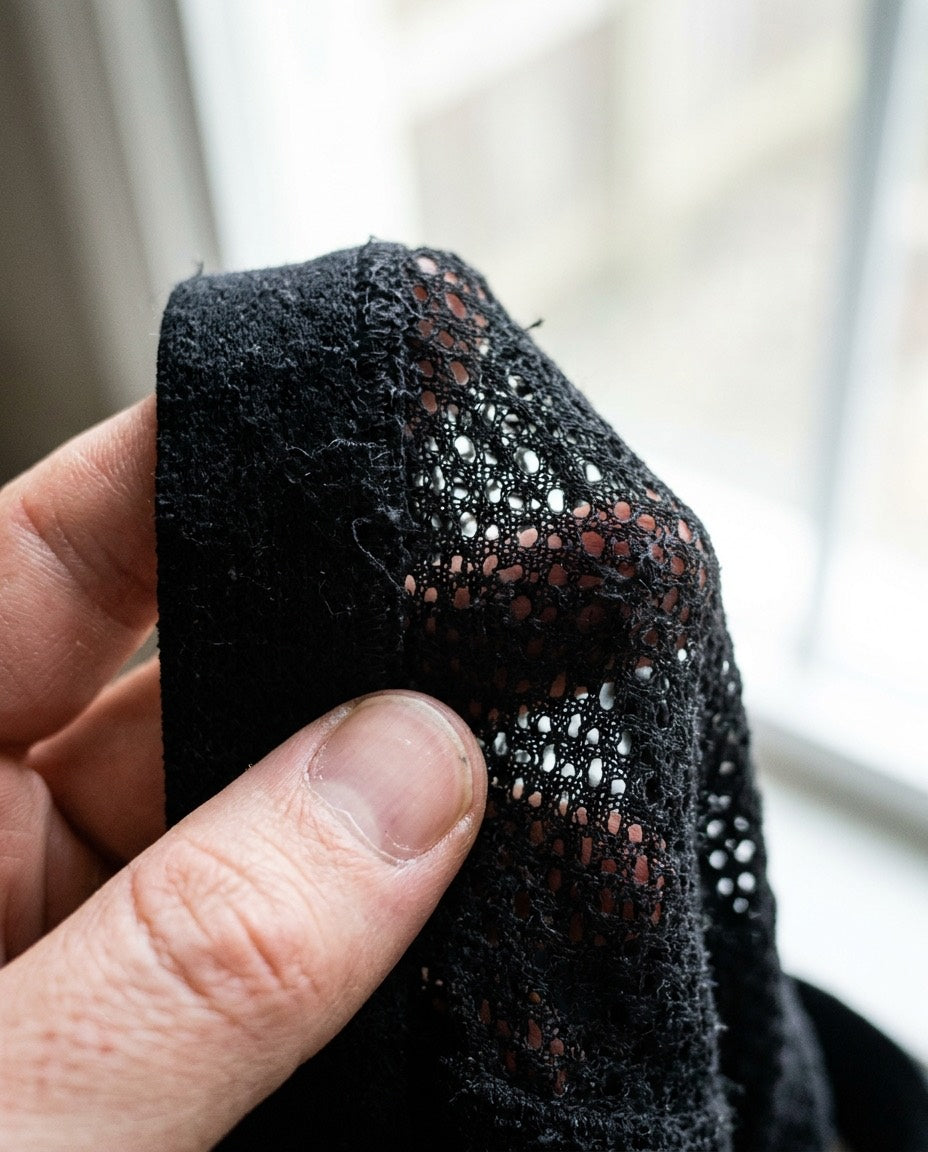
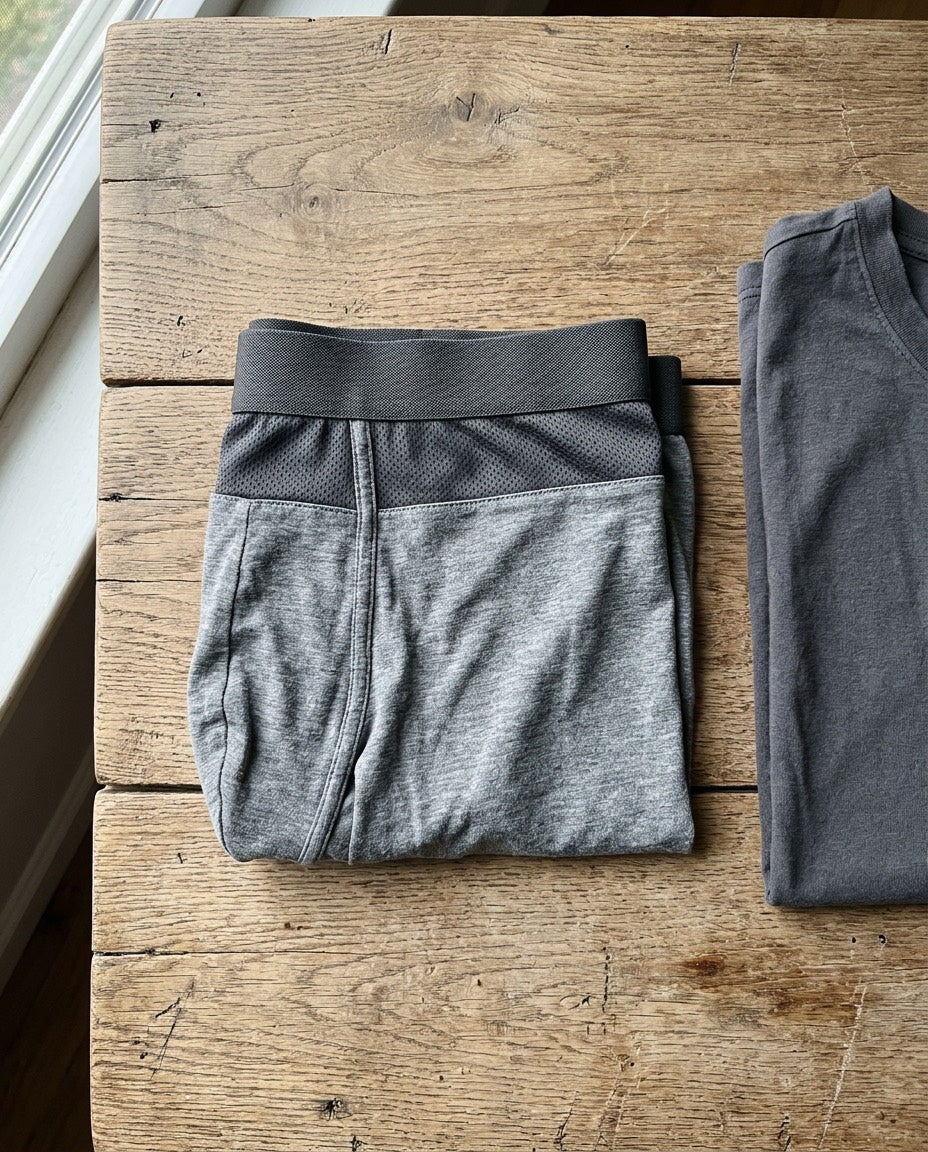
Auro's bamboo viscose trunks are built in two zones: a solid pouch for coverage and support, and open AuroVent™ honeycomb mesh across the hips, inner thighs and seat, designed to let air move instead of trapping heat and moisture the way standard cotton underwear does. It isn't a replacement for the basics — movement, breaks, breathable clothing overall — it's a small piece of the same idea, worn every day without having to think about it.
How it's built
- Base fabric
- AuroSoft™ bamboo viscose blend: 70% bamboo viscose, 25% nylon, 5% spandex, with 4-way stretch.
- Ventilation
- AuroVent™ honeycomb mesh across the hips, inner thighs and seat, around a solid, opaque CoolPouch™ front panel.
- Fit
- A trunk cut with a 4" inseam at size M: snug through the seat, relaxed through the leg, with a contoured pouch that supports without compressing.
- Care
- Machine wash cold, tumble dry low, and skip the fabric softener.
None of this is framed as a medical fix, and it shouldn't be treated as one. It's a practical response to one specific, well-understood input — trapped heat — delivered through something most men already wear every day without a second thought.
Common questions
A few things worth clarifying before you read this as more than it's meant to be.
Does this mean regular underwear is bad for your health?
No. Standard cotton underwear isn't harmful — it's simply not optimized for airflow the way a ventilated design is. For most men, the difference is incremental, not dramatic, and sits alongside bigger factors like sleep, movement, and overall health habits.
How quickly would someone notice a difference?
The most immediate, noticeable difference is comfort — less heat and moisture buildup over the course of a day. We don't have clinical timeline data on hormone levels specifically, and would be cautious of any source that claims a precise number of days or weeks for that kind of effect.
Is this a substitute for seeing a doctor about low testosterone or fertility concerns?
No. If you have specific concerns about hormone levels, fertility, or any other health condition, that's a conversation for a healthcare provider, not something to self-diagnose from an article or address with a clothing change alone.
Does tighter-fitting underwear actually make a difference, or is that a myth?
It's been studied more than most people realize, and the general direction of the research favors looser, more breathable fits over tight, non-breathable ones — though, as above, how large that effect is in everyday life (versus a lab setting) is still being worked out.
This article is sponsored by Auro and is intended for general informational purposes only. It is not medical advice and does not diagnose, treat, or cure any condition. The physiological information above reflects general, widely accepted science; statements about hormone levels specifically are described as an area of ongoing research, not an established effect of this product.
Speak with a healthcare provider about questions regarding your own health, including any concerns about testosterone, fertility, or related conditions. Individual results from product use may vary.